

Brigitta Beck Aspiring Neuropsychologist

Unbroken
November 27, 2017
Much of their emotional therapy involves accepting their current abilities as perfectly fine while seeking their individual path to further recovery. Day by day. They’re not broken. They are people with their own unique circumstances. They are courageous and remarkable.
As caregivers and therapists, we must have a steadfast mindset that these people are not “broken.” Yes, they’ve had an unfortunate neurological event. And yes, we must be realistic to help them, to push them to strengthen their deficiencies. Without denial. But in our own actions we must eliminate any hints or tones of pity or doubt in our words or body language. Nor should we patronize.
Sometimes this requires our patience, but it must be done.
Our interactions must not be extraordinary. Just regular.
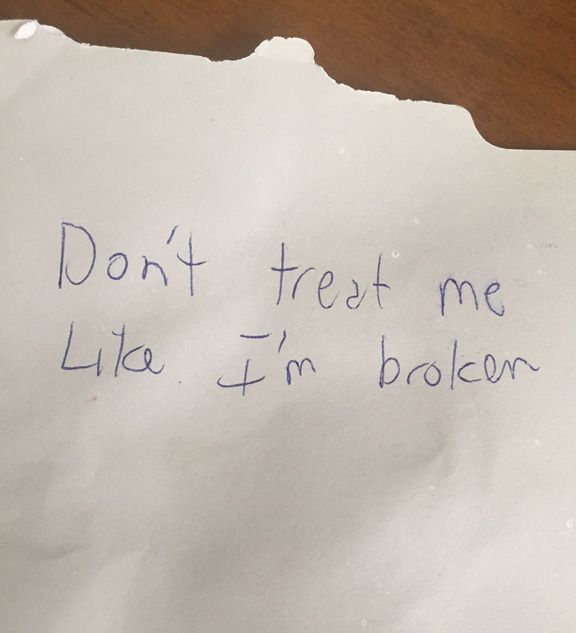
I’ve carried this note for many weeks, reflecting on what it means and how it will affect my approach as a neuropsychologist. These words may guide each of us differently, with our own unique care-giving styles. Our actions will be interpreted by each TBI survivor in their own unique way. But the intent is very clear ...
These words speak for themselves.
Brigitta Beck © 2018
So random.
Yet so profound.
These words, scribbled on a torn piece of paper, simply left on a table after a group counseling session. Expressed by one of those participants, someone with an acquired brain injury. “Don’t treat me like I’m broken.” Weighty evidence that these are real feelings that linger with TBI survivors as they strive always to carry on with a “normal” life. They know what’s happening around them.
Insights:
 | ||||
